PhD position in #SoilScience - join my research group and work together with me on the project: ‘CINCA - Climate change Impacts on Nutrient and Carbon Allocation in soils of maritime Antarctica’ at @tuberlin.bsky.social #biocrust #POM #MAOM #Antarctica #SOC
stellenticket.tu-berlin.de/en/job-offer...
28.11.2025 13:42
👍 16
🔁 16
💬 1
📌 0
whereas cup plant relied more on biopore-mediated flow, these biopores were partly blocked by roots and organic matter, in part reducing conductivity.
Congratulations to L. Rohlmann for this outstanding research! 👏
#SoilScience #PerennialCrops #CarbonSequestration
03.11.2025 10:21
👍 1
🔁 0
💬 0
📌 0
Interestingly, this process may be strongly supported by soil (meso)fauna, which appear to play a key role in creating and maintaining these porous microstructures.
Both systems differed in how water moved through the soil, the crop rotation was dominated by matrix-driven flow....
03.11.2025 10:21
👍 1
🔁 0
💬 1
📌 0
Cup plant develops a biologically driven pore structure rich in biopores and organic matter.
We could follow the disintegration of roots into POM and found that POM within the soil matrix promoted the development of a porous matrix, a structure closely linked to soil organic carbon stabilization.
03.11.2025 10:21
👍 1
🔁 0
💬 1
📌 0
This study used X-ray microtomography (µCT) to visualize how ten years of Silphium cultivation reshape the 3D pore architecture of soil and how these structural changes control carbon storage and near-saturated water flow.
➡️ Key findings:
03.11.2025 10:21
👍 1
🔁 0
💬 1
📌 0


🎉 New: Perennial Roots, Lasting Structure: How Silphium perfoliatum alters pore structure to shape carbon storage and water flow
🔗 www.sciencedirect.com/science/arti...
Excited to share the results of L. Rohlmann’s thesis.
03.11.2025 10:21
👍 1
🔁 0
💬 1
📌 0
LinkedIn
This link will take you to a page that’s not on LinkedIn
This rediscovery shows that smart soil interventions can leave a long-term ecological fingerprint — improving subsoil structure, supporting roots, and storing carbon.
Read our joint publication with @zalf.bsky.social , @ufz.de and @tuberlin.bsky.social here
🔗 www.sciencedirect.com/science/arti...
28.10.2025 07:08
👍 1
🔁 0
💬 0
📌 0
🔹 Even more striking: these shafts contain particulate organic matter comparable to today’s topsoil — a clear sign of ongoing root growth and carbon input over decades. 🌱
🔹 The subsoils continue to act as active carbon reservoirs — with carbon levels similar to the topsoil >40a later.
28.10.2025 07:08
👍 0
🔁 0
💬 1
📌 0
🔹 Using X-ray computed tomography (X-ray CT), we observed that the subsoil shafts created by mFDT show enhanced pore structure and biopore connectivity, especially in sandy soils.
Even after 40+ years, the soil still “remembers” the tillage pattern!
28.10.2025 07:08
👍 0
🔁 0
💬 1
📌 0
Those sites were eventually lost to time… until colleagues at the @zalf.bsky.social recently rediscovered them.
We returned to these historic fields to see if mFDT left any trace beneath the surface after four decades. What we found:
28.10.2025 07:08
👍 0
🔁 0
💬 1
📌 0

Sometimes soils remember what we forget. 🌾
Over 40 years ago, researchers in the former GDR carried out large-scale experiments with meliorative fractional deep tillage (mFDT) — designed to loosen compacted soils and improve rooting conditions. A Thread on our new publication.
28.10.2025 07:08
👍 3
🔁 0
💬 1
📌 0
This leads to a self-organizing rhizosphere, balancing soil structure with biological activity, creating hotspots for microbes and improving water/nutrient flow.
30.09.2025 07:39
👍 1
🔁 0
💬 0
📌 0
Close to the root surface (<0.2 mm), root effects are visible, but beyond that, preference for existing pores matters more.
In sieved soils, roots compact narrow pores, but in intact soils with biopores, compaction is minimal—roots reuse existing pore networks instead.
30.09.2025 07:39
👍 0
🔁 0
💬 1
📌 0
Using repeated X-ray µCT imaging, this study separated root-induced effects (compaction, shrink/swell) from root growth preference (roots choosing existing pores).
Main finding: Growth preference, not root-induced changes, is the dominant driver of rhizosphere porosity
30.09.2025 07:39
👍 0
🔁 0
💬 1
📌 0

"In einer Stadt, in der Kultur auf Kante genäht wird, schaffen wir Sichtbarkeit.
Dort, wo Kunst Raum fordert – und Verantwortung übernimmt.
Ein Statement gegen das Unsichtbarmachen. Für die Szene. Mit der Szene.
Kommt vorbei. Zeigt euch."
www.tu.berlin/veranstaltun...
25.06.2025 09:40
👍 5
🔁 3
💬 1
📌 0
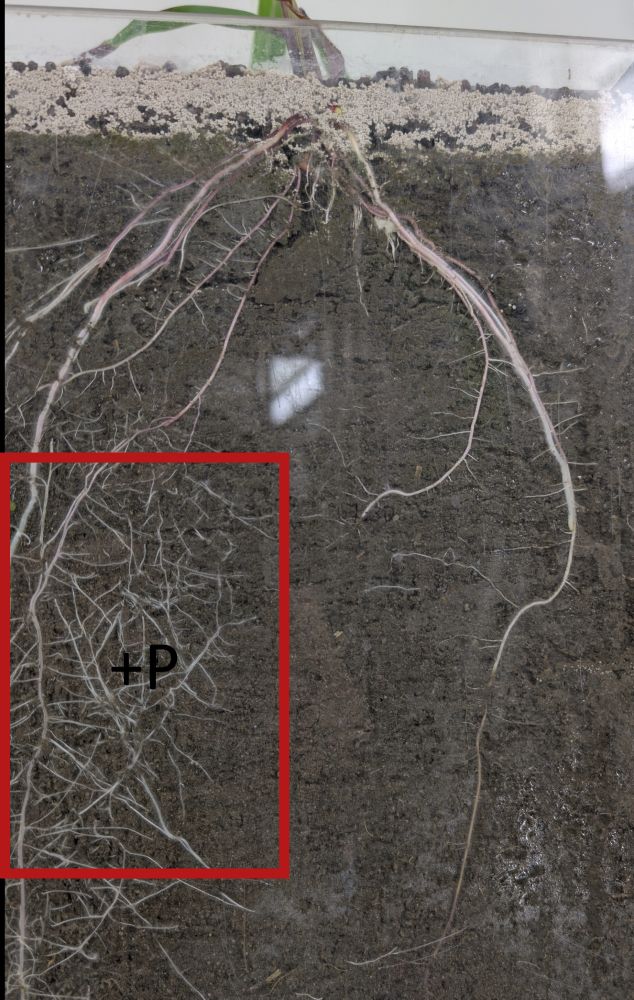
Rhizobox with roots of zea mays. On the left side of the box a rectangle is drawn depicting the area where P-fertilizer was added. Roots in this rectangle show much more lateral roots compared to the rest of the box.
Always nice when experiments with students turn out well. Looking for root adaptations (architecture, phosphatase, mycorrhiza) after localised P addition
23.06.2025 12:17
👍 4
🔁 0
💬 0
📌 0

Schematische Abbildung mit Ökosystemleistungen in Agrarlandschaften: Nahrungsmittel- und Biomasseproduktion, Landschaftsästhetik, Biodiversitätsschutz, Boden-Biodiversitätsschutz, Dürreschutz, Klimaregulierung, Hochwasserschutz, Wasserqualität, Biokontrolle, Bestäubung (eigene Darstellung).
1/ Jedes Kind weiß, dass Landwirtschaft dafür da ist, Nahrungsmittel zu produzieren. Doch sie trägt auch anderweitig zum menschlichen Wohlergehen, u. a. durch die Bereitstellung von sog. Ökosystemleistungen:
21.04.2025 17:29
👍 102
🔁 30
💬 7
📌 5
Steuerskandal: Wissenschaft hinter Paywalls
Wissenschaftliche Artikel hinter Paywalls und milliardenschwere Verlage profitieren. Bei MAITHINK X zeigt Mai Thi Nguyen-Kim, was man noch tun kann.
Meine lieben (deutschsprachigen) Leute,
meine Kolleg:innen und ich haben uns einen kleinen Traum erfüllt und endlich mal eine ganze Folge MAITHINK X nur zum Thema Scientific Publishing gemacht 🤩 Schaut gerne rein und sagt, was ihr dazu denkt! ❤️
www.zdf.de/video/shows/...
24.03.2025 11:05
👍 148
🔁 40
💬 7
📌 6
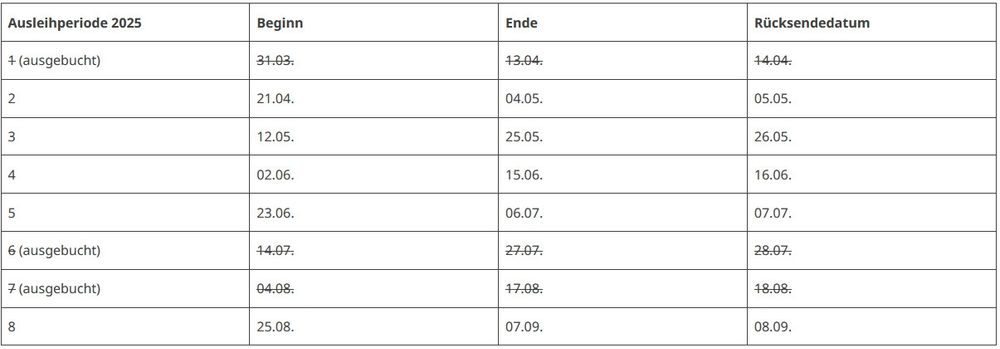
Es gibt noch ein paar freie Plätze für die Bodenmikrofon ausleihe. Los geht's!🎧🐜
20.03.2025 16:54
👍 2
🔁 1
💬 0
📌 0

The title pages of the three papers: "Ueber die Art der Wahrnehmung des Schwerkraftreizes bei den Pflanzen" by Bohumil Řehoř Němec (1900), "Ueber die Perception des geotroplschen Reizes" by Gottlieb Johann Friedrich Haberlandt (1900), and "AUX1 regulates root gravitropism in Arabidopsis by facilitating auxin uptake within root apical tissues" by Alan Marchant et al. (1999). On the left, an sketch from Haberlandt, showing a set of cells from a root that was tilted by 13 degrees. The starch granules are visible inside the cells and have shifted from the center to the corners of the cells that is now pointing down along the gravitropic force. On the right is a sketch from Marchant, showing a root tip with arrows that indicate the auxin flow: Down toward the QC inside the vasculature, then out to the sides and back up toward the shoot in the outer tissues. When the root is slightly tilted, the shoot-ward auxin flow is redirected to the lower side, where it inhibits cell elongation. Hence, the cells on the opposite side elongate more, which leads to root bending.
#PlantScienceClassics #19: Root gravitropism: 120 years ago the starch-statolith theory was described, ~100 years ago the Cholodny-Went theory proposed, and 25 years ago the directional auxin flow was mapped as reverse fountain in the root tip. #Phytohormones #Gravitropism #Auxin #PlantScience
19.03.2025 15:14
👍 38
🔁 16
💬 1
📌 2

Ab sofort könnt ihr in der Bundesrepublik Deutschland Bodenmikrofone ausleihen! es sind noch ausreichend Ausleihzeiträume ab dem 31. März frei!
Alle Informationen zum Mikrofonverleih erhaltet ihr unter soilcast.de/bodenmikrofone
#Bodenkunde #Bodenakustik #Soilcast
15.03.2025 09:18
👍 13
🔁 8
💬 3
📌 1
Mehr als nur „Dreck“ - wie Überleben in der Klimakrise von Böden abhängt
YouTube video by TUBerlinTV
"Mehr als nur „Dreck“ - wie Überleben in der #Klimakrise von #Böden abhängt"
youtu.be/_vXwSjqgm1k?...
Vortrag von Prof. Dr. Carsten W. Müller, TU Berlin, FG #Bodenkunde, zur Ringvorlesung zum #Klimaschutz „TU Berlin for Future - Teil 1“ am 13.01.25
#Boden #Bodenschutz #Bodenkunde #Klimawandel #Klima
29.01.2025 10:52
👍 7
🔁 3
💬 0
📌 0

Diese Woche durfte ich der Landjugend #Erosionsschutz nahe bringen. Nachdem mir hier auf X ein bisserl langweilig ist - ein kleiner Diskurs zum Thema als Threat. 1/X
27.01.2025 17:09
👍 60
🔁 22
💬 4
📌 9

High time for #EGU25 submissions. Consider contributing to our interdisciplinary session on the spatial heterogeneity of soils influencing biogeochemical matter cycles and C dynamics.
meetingorganizer.copernicus.org/EGU25/sessio...
@edithhammer.bsky.social, @mud-maik.bsky.social, S.König, N.Meyer
14.01.2025 09:54
👍 10
🔁 5
💬 0
📌 0
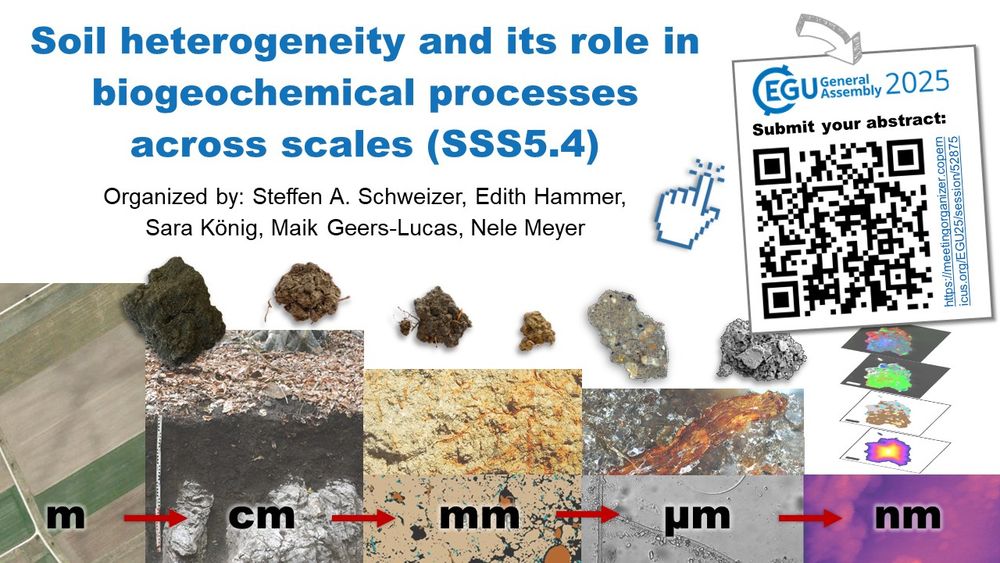
Image showing the session title "The spatial heterogeneity of soils influences biogeochemical matter cycles and C dynamics" and pictures of soils at different scales.
🚨 Don't miss EGU's submission deadline (15.01)! 🚨
Are you working on spatial heterogeneity of soils? Whether it's through image analysis or other methods, we’d love to hear from you!
SSS5.4: "Soil heterogeneity and its role in biogeochemical processes across scales"
🔗 tinyurl.com/SSS54
08.01.2025 09:27
👍 2
🔁 1
💬 0
📌 0
Image showing the session title "The spatial heterogeneity of soils influences biogeochemical matter cycles and C dynamics" and pictures of soils at different scales.
🚨 Don't miss EGU's submission deadline (15.01)! 🚨
Are you working on spatial heterogeneity of soils? Whether it's through image analysis or other methods, we’d love to hear from you!
SSS5.4: "Soil heterogeneity and its role in biogeochemical processes across scales"
🔗 tinyurl.com/SSS54
08.01.2025 09:27
👍 2
🔁 1
💬 0
📌 0

Rentier bewegt sich auf einem Permafrostboden. Im Hintergrund ist ein Gewässer zu sehen.
#Rentiere: Weihnachtshelfer UND Klimaschützer 🦌❄️
Sie bremsen die #Permafrost- Erwärmung, fördern
#Biodiversität & schaffen stabilere Ökosysteme. Forschung u.a. von Carsten Müller/ @cwmsoils.bsky.social zeigt, wie die Pflanzenfresser dem #Klima helfen können. 🌍
ℹ️ www.tu.berlin/go203083/n63...
18.12.2024 08:41
👍 8
🔁 4
💬 0
📌 0