
A chromosome-level reference genome for the colonial marine hydrozoan Podocoryna americana https://www.biorxiv.org/content/10.64898/2026.03.04.709628v1
07.03.2026 03:36
👍 3
🔁 2
💬 1
📌 0
A chromosome-level reference genome for the colonial marine hydrozoan Podocoryna americana https://www.biorxiv.org/content/10.64898/2026.03.04.709628v1
Congratulations!
Thrilled to share that our preprint has been accepted in Science Advances! Grateful to an incredible team & collaborators.
Link: www.science.org/doi/10.1126/...
👏 @annaferraioli.bsky.social @maikekittelmann.bsky.social
@msarscentre.bsky.social @erc.europa.eu @hfspo.bsky.social #ctenophores
Final version @nature.com of our paper describing unconventional multicellular development in a choanoflagellate inhabiting an extreme environment. A ton of new data since the first @biorxivpreprint.bsky.social preprint (which we've kept updating).
A brief 🧵 (carried over from the old place)
We are thrilled to share our new pre-print: “System-wide extraction of cis-regulatory rules from sequence-to-function models in human neural development”. S2F-deeplearning models can accurately encode enhancers, yet decoding these models into human-interpretable rules remains a major challenge.

Exciting news to start the new year! We’re thrilled to see this work finally out in @natecoevo.nature.com, the result of a major collaboration between my lab and the labs of Veronica Hinman and Nacho Maeso, began many years ago with the dear José Luis Gómez-Skarmeta.
www.nature.com/articles/s41...
Never thought I'd be on #spotify, but here we are. More on our findings here: doi.org/10.1073/pnas....
#Ctenophora @unibergen.bsky.social

Top: The phylogenetic position of Nematostella and localization of Vasa2 +/Piwi1+ cells within the juvenile polyp body plan. (A) Simplified phylogenetic tree highlighting the phylogenetic position of the sea anemone Nematostella vectensis and other animal taxa relevant for this study. All animal silhouettes are licensed under CC0,1.0 Universal Public domain and taken from https://www.phylopic.org. (B–D) Schematics showing the localization of Vasa2+/Piwi1+ cells in a juvenile polyp, depicted in longitudinal (B) or cross-section (C, D). (E) Schematic representation of the multipotent, Vasa2+/Piwi1+ stem/progenitor cell population and a simplified summary of their germinal and somatic progeny. (F) Schematics of cell cycle phases, highlighting the incorporation of EdU during S-phase (black line) and the phosphorylation of Histone H3 (pH3+) during metaphase. Bottom: Confocal image of two Vasa+/Piwi+ stem-like cells in the inner epithelial folds of the sea anemone Nematostella vectensis. Immunolabelling of mOrange2-Piwi1 fusion protein (yellow) in a transgenic knock-in line combined with nuclear stain (white). Image credit: Paula Miramón-Puértolas.
How do animals with lifelong growth modulate cell #proliferation? @eudaldpascual.bsky.social @ktgarschall.bsky.social @prhsteinmetz.bsky.social show that starvation induces G1/G0 #CellCycle arrest in Vasa2+/Piwi1+ #SeaAnemone cells; cycle re-entry is TOR-dependent @plosbiology.org 🧪 plos.io/48J2o6P

Our paper on the role of neurons in Nematostella head regeneration is now out at @currentbiology.bsky.social Big thank you to all collaborators, it was a pleasure!
Ectopic head regeneration after nervous system ablation in a sea anemone: Current Biology www.cell.com/current-biol...

Glad to see our phoronid genome study featured on the cover of @currentbiology.bsky.social! It shows how genome structure can be used to test competing hypotheses of nested topology and how derived structural changes provide evidence for monophyly.
www.cell.com/current-biol...
Here we go again 😄

Metamorphosis in Schizocardium californicum drives dramatic reorganization of cell types, with adult structures forming through transcriptional reprogramming of larval cells rather than their wholesale replacement.
@paul.bump.bsky.social
@lowelab.bsky.social
www.biorxiv.org/content/10.1...

Our study, just published in #ScienceAdvances and funded by @hfspo.bsky.social, explores the post metamorphic cell composition of the sea urchin juvenile, revealing that its body is head-like. Long considered brainless creatures, they’re all brain instead!
www.science.org/doi/10.1126/...
Woop-woop! Congratulations!

Sea star embryo development. Blimp1 mRNA expression localizes at the oocyte's vegetal site, similar to Vasa and Wnt, important genes for germline formation.
#DBfeature #EvoDevo
mRNA splicing variants of the transcription factor Blimp1 differentially regulate germline genes in echinoderms
"Each Blimp1 isoform has distinct functions within & between species"
by Gerardo Reyes, Nathalie Oulhen, Gary Wessel
www.sciencedirect.com/science/arti...
More pictures of the brilliance that is (lab manager) Aida de la Cruz with her creation.
A nice survey of membrane tags in a variety of EvoDevo models (also featuring Nematostella). Thanks to @michalis-averof.bsky.social for the invitation.

Figure 8 - Working model for regeneration in H. diminuta. Overlapping regions at the head (blue bars) play two contrasting roles: proliferation and proglottidization rate are negatively regulated whereas GR maintenance is positively regulated. βcat1 expression is posteriorly biased and βcat1 is necessary to maintain stem cells in the GR, which are required for proglottid regeneration. Expression of sfrp is anteriorly biased and sfrp is necessary to maintain GR length. Signals that may link the head/brain/anterior GR to βcat1 and sfrp expression or activity remain to be identified. Serial amputation within the GR revealed increased failure to regenerate the GR and proglottids (yellow cross) at intermediate distances forming a tipping point zone that is refractory to regeneration (black shading). Both smaller and larger fragments amputated outside of the black region regenerated equivalently (green ticks).
Signals from the head and germinative region differentially regulate regeneration competence of the tapeworm Hymenolepis diminuta
Read this #LifelongDevSI #OA Research Article by Elise McCollough Nanista, Tania Rozario & colleagues @ugaresearch.bsky.social:
journals.biologists.com/dev/article/...
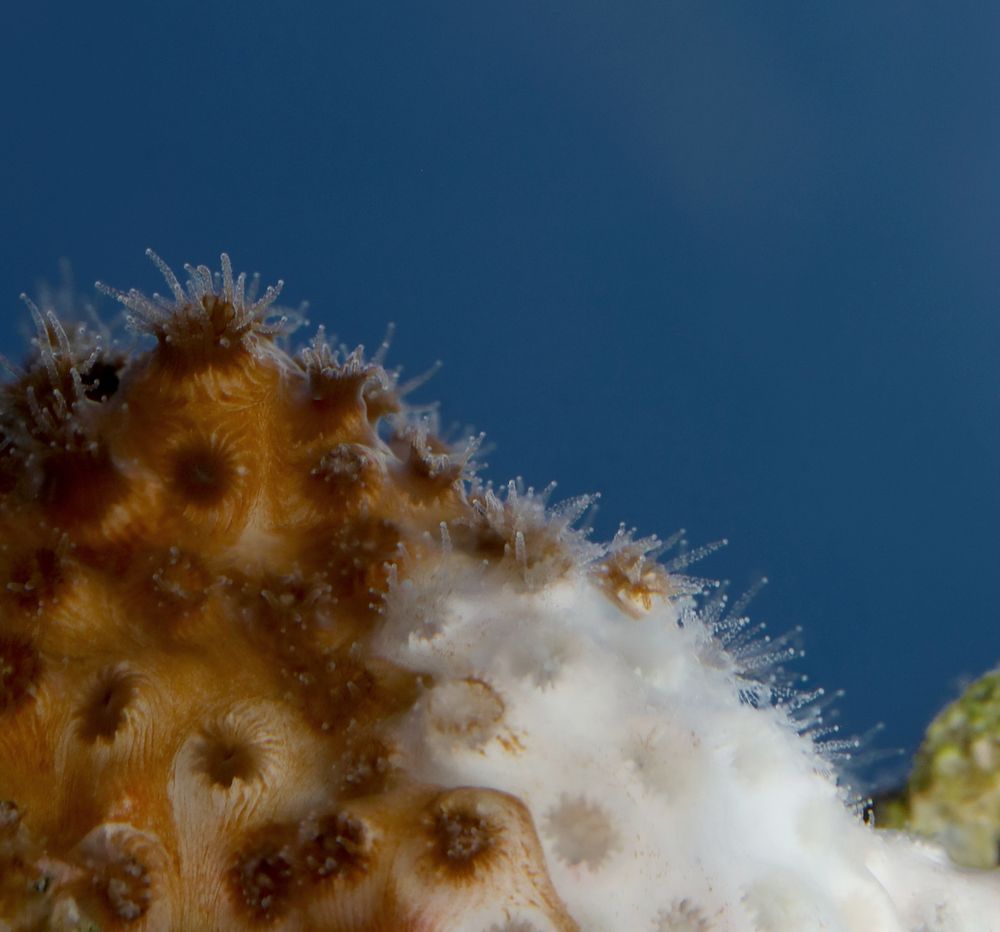
We are happy to share our latest work in @nature.com . We study the genomic and cellular basis of facultative symbiosis in Oculina patagonica - a Mediterranean coral remarkable for its ability to survive long periods without algal symbionts. Led by Shani Levy and @xgrau.bsky.social
rdcu.be/eLbaZ
Congratulations, Océane!
Cool-cool-cool
Hi, can someone point me to good commercial polyclonal anti-FMRF amide antibody, which is not from rabbit? Ideally, tested on cnidarians. Thanks in advance!

Sanjay's amazing story is available on www.biorxiv.org/content/10.1... Congratulations to @sanjay-n.bsky.social, @ulrichtechnau.bsky.social and everyone else 🎉
Congratulations Venky!

Congratulations to Dr. Paul Knabl @paulknabl.bsky.social Fantastic work and excellent defense!
Congratulations! 🎉
I don't know about "twice". My memory is crappier...

Thanks Max (although it's primarily @emmanuelhaillot.bsky.social who deserves the congratulations here). May I suggest that you also look at this paper www.nature.com/articles/s41... - the fit together really well.
