If papers can tell what year they were "supposed" to be submitted / published, err....
19.02.2026 12:07
👍 2
🔁 0
💬 0
📌 0

@tomdonoghue
Cognitive & Computational Neuro Scientist - studying electrophysiological signals in human brains, mostly by writing Python code. Lecturer of Cognitive Neuroscience @ University of Manchester. https://tomdonoghue.github.io/
If papers can tell what year they were "supposed" to be submitted / published, err....

📚 Reading Women in Cognitive Science 📚
“Recommendations for readings are welcome, especially in the history of cognitive science (prior to 1950s, and the older the better).”
irisvanrooijcogsci.com/2026/02/15/%...
“Collection of Handwritten Letters from Children in Detention Center” sounds like an exhibit in the Holocaust Museum.
If I know you use this I will literally never cite your work again, because there is literally no way to trust it or you

Ripple oscillations are central for memory and sleep.
But ripple detection in humans remains challenging. Here we introduce a simulation approach in @natcomms.nature.com as common ripple detectors mainly pick up 1/f noise and not genuine oscillations
👇
www.nature.com/articles/s41...
#neuroskyence

Had a blast hosting @tomdonoghue.bsky.social at our lab in Santiago. We went full aperiodic mode, with @gnboncompte.bsky.social . Very cool collab ideas!! Thanks Tom!!
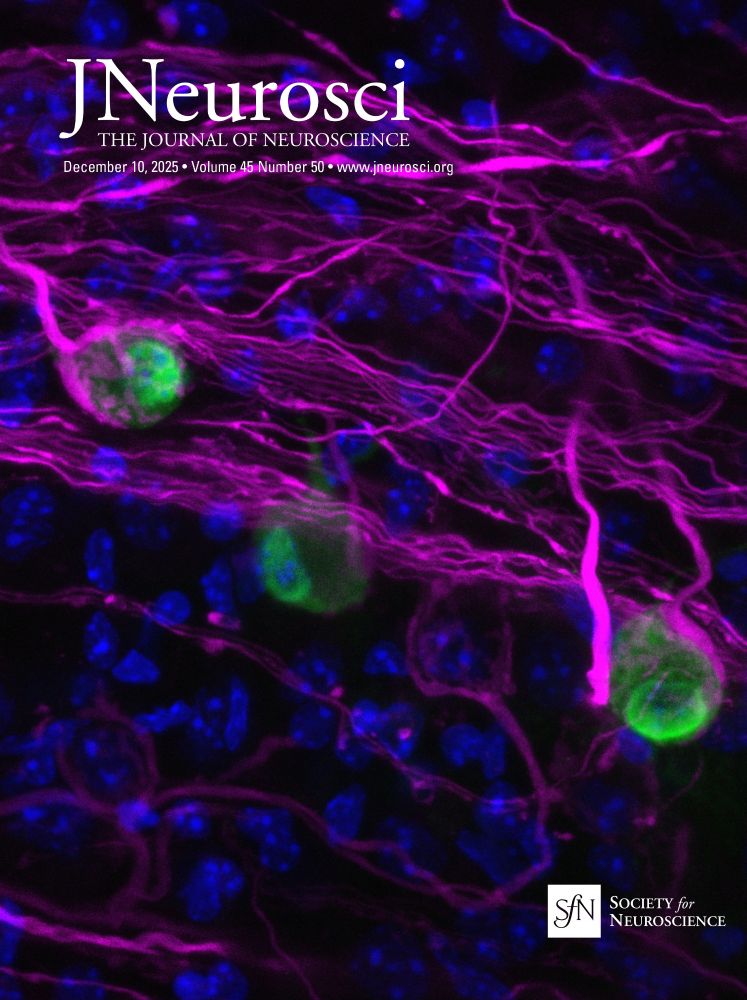
Aperiodic activity reflects pathological waveforms in epilepsy (and not necessarily hyper-excitability or altered E/I-balance). The 1/f slope goes up *or* down as function of waveforms during seizures. New work by Laura Heidiri and Frank van Schalkwijk from the lab: www.jneurosci.org/content/45/5...
I'm starting to think about joining (starting?) team linear-linear: let the data live in the simplest place (sort of). We just have to come to terms with everything being wackily skewed & statistics not working - it probably wont be productive, but like, maybe our sense of the data will be better 🤷♂️
I increasingly feel like ~51% of our problems and confusion points in neuroscience have logged data as part of the culprit...

Another new paper from the lab: Predictive theories like the SR imply that navigators who navigate differently should have cognitive maps which differ in predictable ways. Here we show that this holds in mouse hippocampal CA1.
www.sciencedirect.com/science/arti...

Finally got the job ad—looking for 2 PhD students to start spring next year:
www.gao-unit.com/join-us/
If comp neuro, ML, and AI4Neuro is your thing, or you just nerd out over brain recordings, apply!
I'm at neurips. DM me here / on the conference app or email if you want to meet 🏖️🌮
This was a wonderful collaboration - many thanks to Mohamed, who initiated this project and led all the work here! It's been great to jump into the world of sleep research with such capable collaborators!

A reprint of a figure from the paper, showing the different model forms & fits.
Another notable aspect of Mohamed's analyses are the explorations of model form (including measuring the aperiodic 'knee'), including comparing between intra- & extra-cranial recordings.
If you're interested in model forms, knees, modality differences, etc - lots of analyses & discussions of this!

A reprint of figures from the paper, showing the time-resolved analyses between sleep stages, and the time-resolved analyses related to auditory stimuli.
The time-resolved analyses cover 3 time frames: variation across the whole night, variations over 10s of seconds between sleep stages, and sub-second exponent variations in response to auditory stimuli - showing how aperiodic activity dynamically tracks both internal states & external stimuli

📜🎉 Our project on aperiodic neural activity during sleep, led by the wonderful @mosameen.bsky.social, is now published!
This project shows how time-resolved measures of aperiodic neural activity track changes of sleep stages + lots of other analyses in iEEG & EEG!
www.nature.com/articles/s44...

I'm blown away to see our 2020 spectral parameterization (fooof) paper is the 2nd most cited neuroscience paper of 2020 🤯
What an adventure it's been - now ~10 years on & ~8500 km from where I first started on the project, and still enthralled by the work!
www.thetransmitter.org/publishing/w...

For data, my favourite is DANDI (about.dandiarchive.org), since if it's on there it should be well organized / formatted. Similarly, Github for code.
Otherwise, this is mostly about human data - but lists several sources with neurophys too:
github.com/openlists/El...

📣 🧠 We have a new PhD studentship at @fbmh-uom.bsky.social with Caroline Lea-Carnall & @tomdonoghue.bsky.social: Dopamine, brain networks & plasticity research. Computational modelling + multimodal neuroimaging: tinyurl.com/yr58xj8v
Application deadline Nov 15th!

As always, I tried to make this project as open as possible - code & literature data is all included here if you want to look at additional details, etc!
github.com/TomDonoghue/...

A copy of Table 3 from the manuscript, overviewing a set of recommendations for future work.
Based on this high level overview of lots of interesting & exciting work, I also tried to integrate the discussion points and findings thus far to create a set of suggested recommendations for future work studying aperiodic activity in clinical populations. Hopefully this is useful for future work!

I also discuss motivations for studying aperiodic activity, including as a potential biomarker & the oft discussed putative interpretation of the exponent as a marker of E/I balance. While this is an exciting possibility, I also urge some caution based on this review & other recent empirical work:

Copy of Table 1 from the paper, showing a summary of the most studied disorders and an overview of the findings
It turns out there is a lot of current research on this, across quite a range of disorders with lots of reported links between clinical disorders and aperiodic activity - but also quite a bit of variability in the findings and overlapping discussion points that this review explores and discusses.

📜🎉 I'm happy to share that my review of clinical research investigating aperiodic neural activity is now published!
It examines 177 reports of aperiodic activity in clinical disorders summarizing findings, discussion topics, & making some recommendations!
onlinelibrary.wiley.com/doi/10.1111/...
📜 New preprint led by the wonderful Weijia Zhang on place cells: specifically if & how different methodological approaches used across human & rodent datasets may relate to differences in identified populations and implications for cross-species spatial cognition!
Check it out here:

I've been waiting some years to make this joke and now it’s real:
I conned somebody into giving me a faculty job!
I’m starting as a W1 Tenure-Track Professor at Goethe University Frankfurt in a week (lol), in the Faculty of CS and Math
and I'm recruiting PhD students 🤗

"Health losses attributed to anthropogenic climate change," a brief communication in the journal Nature Climate Change. There's a map showing regions of the world, and pie charts of relevant studies as they apply to different health impacts like "heat-related deaths" and "maternal and child health"
🚨 NEW: Climate change is already causing 30,000 deaths per year - a global annual economic loss of $100-350B USD - but the true damage is probably 10x higher. Out TODAY in Nature Climate Change: the first systematic look at the science of "health impact attribution" 🔓 www.nature.com/articles/s41...

Mahmoud Khalil on exile, liberation and Ice detention: ‘It was a clear act of cruelty’

Abstract: Under the banner of progress, products have been uncritically adopted or even imposed on users — in past centuries with tobacco and combustion engines, and in the 21st with social media. For these collective blunders, we now regret our involvement or apathy as scientists, and society struggles to put the genie back in the bottle. Currently, we are similarly entangled with artificial intelligence (AI) technology. For example, software updates are rolled out seamlessly and non-consensually, Microsoft Office is bundled with chatbots, and we, our students, and our employers have had no say, as it is not considered a valid position to reject AI technologies in our teaching and research. This is why in June 2025, we co-authored an Open Letter calling on our employers to reverse and rethink their stance on uncritically adopting AI technologies. In this position piece, we expound on why universities must take their role seriously toa) counter the technology industry’s marketing, hype, and harm; and to b) safeguard higher education, critical thinking, expertise, academic freedom, and scientific integrity. We include pointers to relevant work to further inform our colleagues.

Figure 1. A cartoon set theoretic view on various terms (see Table 1) used when discussing the superset AI (black outline, hatched background): LLMs are in orange; ANNs are in magenta; generative models are in blue; and finally, chatbots are in green. Where these intersect, the colours reflect that, e.g. generative adversarial network (GAN) and Boltzmann machine (BM) models are in the purple subset because they are both generative and ANNs. In the case of proprietary closed source models, e.g. OpenAI’s ChatGPT and Apple’s Siri, we cannot verify their implementation and so academics can only make educated guesses (cf. Dingemanse 2025). Undefined terms used above: BERT (Devlin et al. 2019); AlexNet (Krizhevsky et al. 2017); A.L.I.C.E. (Wallace 2009); ELIZA (Weizenbaum 1966); Jabberwacky (Twist 2003); linear discriminant analysis (LDA); quadratic discriminant analysis (QDA).

Table 1. Below some of the typical terminological disarray is untangled. Importantly, none of these terms are orthogonal nor do they exclusively pick out the types of products we may wish to critique or proscribe.

Protecting the Ecosystem of Human Knowledge: Five Principles
Finally! 🤩 Our position piece: Against the Uncritical Adoption of 'AI' Technologies in Academia:
doi.org/10.5281/zeno...
We unpick the tech industry’s marketing, hype, & harm; and we argue for safeguarding higher education, critical
thinking, expertise, academic freedom, & scientific integrity.
1/n

Project repository and open materials here:
github.com/TomDonoghue/...