Yup
30.12.2025 00:09
👍 0
🔁 0
💬 1
📌 0
Yup
I will refrain from making the joke I really wanna make right now.

repost if trans people should have dr pepper


I’m looking for work so I’m opening 6 commission slots for Dec-Jan!
Please e-mail me for any inquiries,
I’d love to draw for you!
I'm glad I'm not the only one who thought that.
Jesus, I just realized Lupan the third would make a wild star wars movie, and I'm not even kidding.

100 percent

#PhytoFacts
Your Medicine Monday is brought to you by squalane!
This hydrating oil is used to promote skin health and reduce signs of aging. Although shark livers are an abundant source of it, most squalane is now derived from plants such as olives or by fermentation.
share.google/ZiMl9n7J5PEQ...

#PhytoFacts
Weird Wednesday is brought to you by Broomrapes!
With a staggering 150 species, these parasitic plants sport gorgeous flowers with tiny seeds. No leaves. No chlorophyll. They get all their food and nutrients from their host.
www.britannica.com/plant/broomr...

#PhytoFacts
Your Flower Friday is brought to you by the Giant Sunflower!
Helianthus giganteus is also known as the Tall Sunflower or Swamp Sunflower. It blooms from July to September and grows to 4-10 ft (1 to 3 meters) in height!
share.google/7fgeuXykySCy...


#PhytoFacts
Tree Thursday is brought to you by the Northern Catalpa!
Commonly planted as an ornamental, this native North American tree has a thick trunk, big heart shaped leaves, long seed pods which resemble cigars, and gorgeous flowers.
Northern Catalpa share.google/XnFXsIf5aPei...

Weird Wednesday is brought to you by Dodders!
These plants have no leaves or roots and have specialized stems which burrow into the tissues of other plants to steal sugar and water. Imagine a web of evil silly string.
Dodder www.missouribotanicalgarden.org/gardens-gard...

Tiny Tuesday is brought to you by lichen!
Lichen is a colony organism that is a hybrid of cyanobacteria (algae), multiple filamentous fungi, and bacteria. Pictured is the leafy Flavoparmelia caperata, one of my favorites.
Lichen - Wikipedia share.google/mBHglEEIrtU1...
Silly Science Saturday: Differences in approach
Lab mate #1, looking at her plants: "Awww. Poor thing. You don't look so good. I'll get you some fresh media."
Lab mate #2, examining her own plants: "...sink or swim, bitch."

Tree Thursday: Paper birch (Betula papyrifera)
Known for its distinctive papery white bark, this tree is also known as the "canoe birch" and was used by indigenous Native Americans to make canoes, baskets, shelters, and all manner of tools for daily life.
share.google/PrHcgaoRzbDx...

Flower Friday: Chrysanthemums!
These popular flowers bloom in the fall and are members of the Daisy family. They originate from East Asia, but the majority of the horticultural varieties come from China.
Chrysanthemum - Wikipedia share.google/rw2vjiTUNWR3...

Tiny Tuesday: Bacillus subtilis
This little soil microbe is an absolute rockstar!
It's been used to discover new medicines, promote plant growth, protect plants from pathogens, and as a tiny factory for bio-derived compounds. What can't it do?
share.google/d8zI938XYV49...

Weird Wednesday: Witchweed (Striga)
Don't be fooled by its pretty blooms. This parasitic plant attaches itself to the roots of corn or sorghum and sucks the life out of them. It can cause massive losses in yield and even ruin an entire year's planting.
share.google/FGEBOQIjKpOc...
Silly Science Saturday:
We have a shaker incubator in the lab that thinks its lid is open when it isn't. Of course it won't start if the lid is open, so we give it a gentle reminder by whacking the bullseye drawn on the side labeled "tap that".

Sleepy Sunday:
Deciduous trees enter a hibernation period before winter which is marked by the color change and loss of their leaves. Chlorophyll and sugars are pulled from the leaves into the trunk to act as a natural antifreeze.
Dormancy of trees in winter - PubMed share.google/INbHPXsUvQRX...

Weird Wednesday:
(To the Tune of "SpongeBob SquarePants")
🎶 What's red in color and has no leaves?🎶
🎶RAF-FLE-SI-A🎶
🎶What smells like a corpse and makes its own heat?🎶
🎶RAF-FLE-SI-A🎶
Rafflesia - Wikipedia share.google/CmvnWUEP62wH...

Flower Friday:
Is it a tree?
Is it a bush?
No, it's a vine!
Wisteria! The power, the poise, the presence!
Will eat your house if given the opportunity.
Wisteria - Wikipedia share.google/a2LQJKOr1DMn...

Flower Friday: Passionflowers
An easy to grow, climbing vine which makes huge, exotic looking flowers. Great for trellises, fences, and garden walls.
Passionflower: Plant Care & Growing Guide share.google/Lx8IVrqEgcVi...
Silly Science Saturday:
*Me and coworker 1 were trying to open a box.*
Coworker 2, laughing: How many degrees is it going to take?
Coworker 1: Apparently, three.

Tree Thursday: Crabapples!
Beautiful, hardy little trees with gorgeous flowers and small fruits. You can eat crabapples raw, but they can pack a bitter punch. A better idea is to use them to make cider. 😋
Crabapples: A Tree for All Seasons - Floret Flowers share.google/kNl2nLWW7L6c...

Tiny Thursday: Rhizobium
No fertilizer? No problem!
In exchange for room and board, these soil microbes capture nitrogen from the atmosphere and give it to their plant landlords who make apartments for them out of their roots.
share.google/pRXl5WlhXrfE...
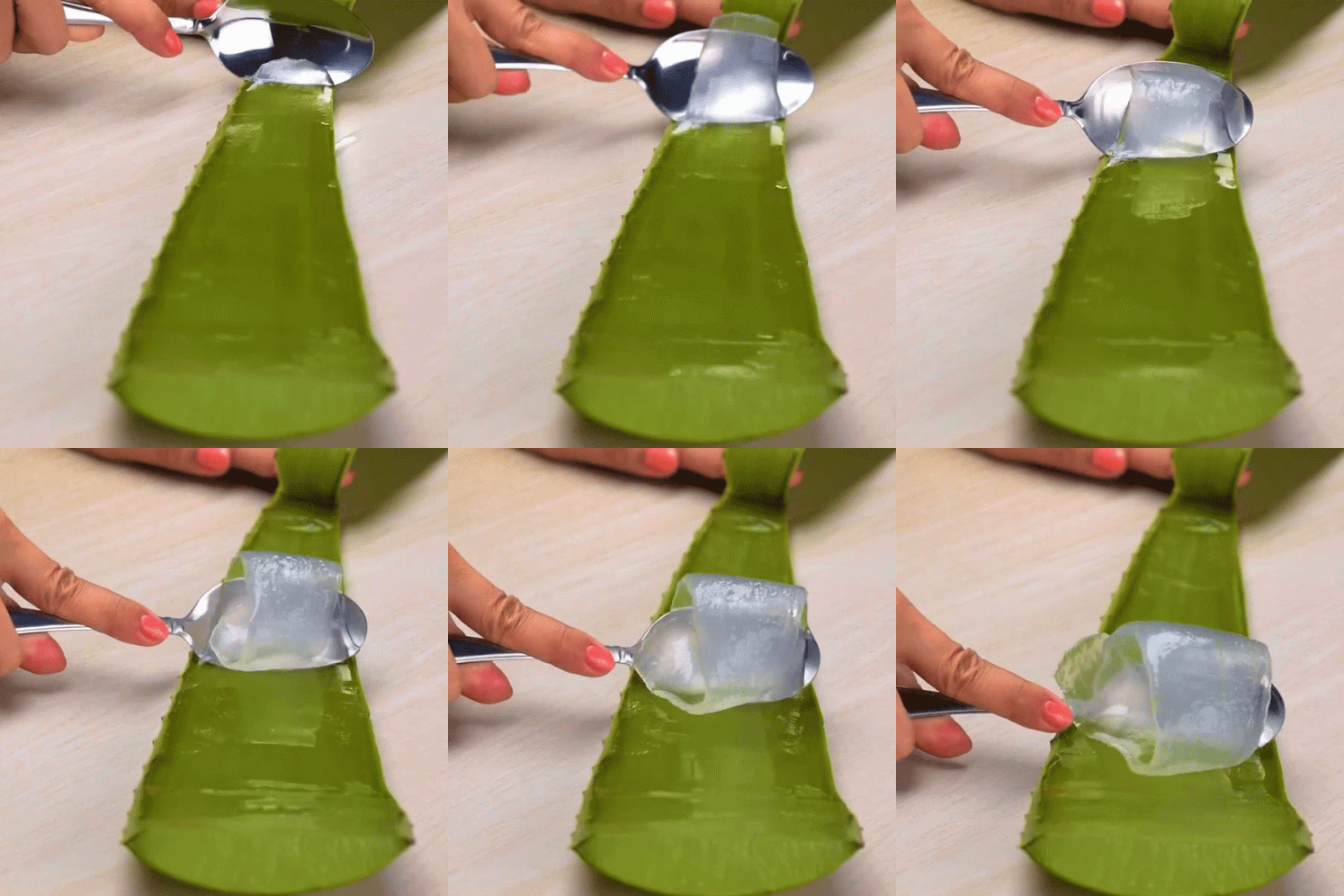
Medicine Monday:
Aloe vera is a cactus-like plant that is grown around the globe in subtropical areas. It has a variety of medicinal properties, but is most well known for the gel-like fluid found within its waxy leaves that is commonly used for the treatment of burns.