Cited in the 1945 book "Gumbo Ya-Ya" (look at the bottom of the 2nd page here). So not only did we make them with rice but we made them with cow peas (black eyed peas) like àkàrà in Nigeria & acarajé in Brazil.
02.11.2025 18:48
👍 1
🔁 2
💬 0
📌 0

In the Louisiana Creole language rum is typically called "tafya" or "tafia"(same pronunciation, different spelling).
02.11.2025 18:34
👍 1
🔁 0
💬 0
📌 0


If you look the word Bamboula/Bambula you can see how Louisiana connects to both Puerto Rico and the Dominican Republic and it's because of Kongo people. These Kongo people in Louisiana were brought into a heavily Senegambian/Malian influenced colony.
Creole culture ❤️
02.11.2025 18:29
👍 1
🔁 0
💬 0
📌 0
Louisiana Creole & Antillean Creole are 2 different French-based Creole languages but 2 of our dialects share a word that differs from the general words for "thing". The Northshore dialect of Louisiana Creole & the Guadeloupean dialect of Antillean Creole use "biten" for "thing".
02.11.2025 18:26
👍 2
🔁 1
💬 0
📌 0

In the past we played our drums the way people in the lesser antilles play drums particularly Martinique & Guadeloupe. The drawing in the left is from New Orleans, Louisiana in the early 1800s, the pictures on the right is a modern day picture from Martinique.
02.11.2025 18:25
👍 1
🔁 1
💬 0
📌 0

"Tafya toujou di lavérité"
"Tafia (rum) always tells the truth"
- A Louisiana Creole proverb taken from the 1885 book "Gombo Zhèbes" but put in modern orthography.
02.11.2025 18:19
👍 1
🔁 0
💬 0
📌 0
All of that was once the Louisiana Territory. Some parts of it became Spanish West Florida. Later on it was all divided up into the states we see today.
18.05.2025 15:03
👍 0
🔁 0
💬 0
📌 0

Although king cakes are a part of our Creole traditions you can find a merging of Louisiana Creole & Italian things in this region. Example: Randazzo's king cakes. On the box it says "Nonna Randazzo". Some Louisiana Creoles even have Italian ancestry.
03.03.2025 20:03
👍 2
🔁 0
💬 0
📌 0
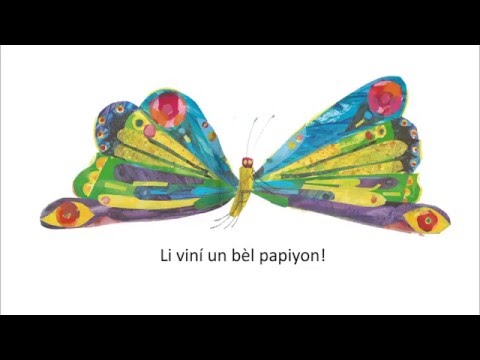
A classic book in Louisiana Creole/Kouri-Vini. This is a great way to teach Louisiana Creole.
youtube.com/watch?v=n_9m...
03.03.2025 15:45
👍 2
🔁 2
💬 0
📌 1
Because there's been lots of Americanization going on in Louisiana Creole communities people use the languages (both Creole & French) less and less and lots of vocabulary gets lost.
25.02.2025 00:04
👍 1
🔁 1
💬 1
📌 0

In Louisiana Creole aka Kouri-Vini it's a slang term for genitalia. This picture is a screencap from the Dictionary of Louisiana Creole.
24.02.2025 23:59
👍 3
🔁 0
💬 0
📌 1
Because these languages are from French colonies there was at times movement of people from colony to colony which created connections of dialect to a whole separate language while the other dialects lacked that connection.
#creole
#linguistics
#kreyol
#kréyol
13.02.2025 20:41
👍 1
🔁 0
💬 0
📌 0
What's interesting is sometimes a dialect of 1 language will have interesting similarities to another language because they may be related which is the case of Northern Haitian Creole & Antillean Creole. Northshore Louisiana Creole & Pointe Coupée have similarities to Antillean & Haitian Creole.
13.02.2025 20:41
👍 1
🔁 0
💬 1
📌 0


There's often confusion on the difference between "language" and "dialect". A dialect is a variety of a language. French-based Creole languages are separate languages each with their own dialects & sub-dialects. Mutually intelligibility can vary from dialect to dialect & language to language.
13.02.2025 20:41
👍 4
🔁 1
💬 1
📌 1
Yes, it sure does!
13.02.2025 19:34
👍 1
🔁 0
💬 0
📌 0
The pic is from the book "African American Religious Cultures". The 2nd pic is from the PDF document "Historical Linguistic Dimensions of Spirit Migration in Haitian Vodou". The 3rd pic is from a screencap of the Wikipedia article about Candomblé Bantu.
13.02.2025 19:32
👍 1
🔁 0
💬 0
📌 0

Middle Passage Marker unveiled in Biloxi, marking spot where first African slaves arrived
A marker in Biloxi now honors and shows the very place where the first slaves were brought to Biloxi during the Transatlantic Slave Trade.
A middle passage marker in Biloxi, Mississippi was unveiled. During the French period Biloxi was actually part of French Louisiana & was the 2nd capital. The 1st ship to arrive came out of Ouidah which is in what is today Benin.
14.01.2025 21:37
👍 6
🔁 1
💬 1
📌 2
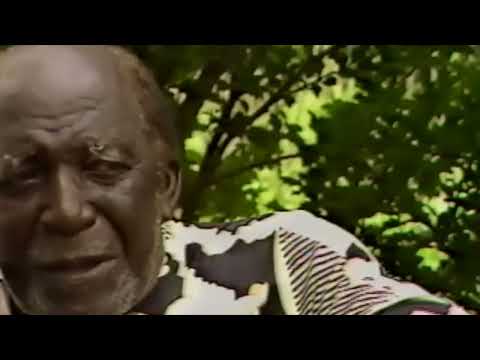
This is a native speaker of Louisiana Creole named "Ben Guiné". "Guiné" is an old way of referring to West Africa particularly near the coast. African derived surnames are/were found among Louisiana Afro-Creoles like "Guiné", "Senegal", "Mina", "Poulard", "Nago", "Congo"etc.
14.01.2025 03:23
👍 5
🔁 1
💬 1
📌 2
This book is old so it uses the old orthography for these languages which essentially is a French-like orthography which isn't used today. Today phonetic or approximate orthographies are used for these Creole languages.
30.12.2024 19:28
👍 3
🔁 0
💬 0
📌 0
For posts in French-based Creole languages we're going to use the hashtag #kblfsky
Nou va sèrvi hashtag-la #kblfsky pou post-yé en tou langaj kréyol baz lèksikal françé
On va utiliser le hashtag #kblfsky pour postes en langues créoles à base lexicale française.
26.11.2024 22:32
👍 7
🔁 3
💬 0
📌 2

Yes! Some people in Pointe Coupée parish speak that way. The Creole of Pointe Coupée is an interesting dialect of Louisiana Creole!
26.11.2024 22:09
👍 1
🔁 1
💬 0
📌 0
Saint Lucian Creole is beautiful! It's a dialect of Lesser Antillean Creole from the island of St. Lucia.
26.11.2024 22:07
👍 7
🔁 2
💬 2
📌 0


Louisiana is connected to other places more than just linguistically. In Louisiana Voodoo, Haitian Vodou & Brazilian Candomblé Bantu/Candomblé Angola they share a Kongo spirit named Limba/Lemba. Kongo people and their culture connects so many of us.
20.11.2024 17:51
👍 6
🔁 0
💬 1
📌 1
I think it'd be neat if we had a live chat or live video feature so we could all talk about how much we enjoy Bluesky becauseit seems like most of us are enjoying ourselves. Call it Sky live in Sky chat or something. Just a suggestion, not a criticism of this place.
18.11.2024 14:51
👍 2
🔁 0
💬 0
📌 1
The different uses of Creole throughout the world always causes problems. Where in from or means anybody born in the colony regardless of race.
18.11.2024 00:51
👍 1
🔁 0
💬 0
📌 0

Caribbean Connections - 64 Parishes
Historically and culturally, South Louisiana has much more in common with the island nations to its south.
It's no secret that Louisiana Creole culture is very much like that of the Caribbean.
"The Picayune’s Creole Cookbook’s Creole jambalaya is not far from one variation from Santiago de Cuba, a city in the country’s eastern section"
64parishes.org/caribbean-co...
17.11.2024 22:55
👍 5
🔁 0
💬 0
📌 1

I'd like to clear up a common misunderstanding. Louisiana Creole & Louisiana French are 2 separate languages & they're both spoken by Louisiana Creole people. LF is a local dialect of French, LC is a language & not a dialect of French. "Cajun French" is also a bad name for our dialect of French.
16.11.2024 20:26
👍 14
🔁 4
💬 1
📌 0