
Definitely my most listened to episode. Lots of re-listen-ability.
26.11.2024 20:25
👍 2
🔁 0
💬 0
📌 0
Definitely my most listened to episode. Lots of re-listen-ability.

I still recommend episode 2, "2023 MeSH" all the time to people! Such a good explanation of MeSH searching.
open.spotify.com/episode/1ay1...
Well part of it is my fault too, so. I'll take responsibility!
You're welcome!
I believe so! Spotify for both.
Medlibs Miscellany, and The Librarian's Guide to Teaching Podcast.
The two I loved are no longer producing episodes unfortunately. 😢
Our next workshop under development: supporting grad student advisors whose students are doing SRs. Even though it's not an "assignment" does not mean the review can be any less rigorous.
Absolutely. Hopefully this workshop helps with educating the faculty members so they can better support students in an appropriate publication method.
Please add me when you have a moment. Thanks!
Please add me as well when you have a chance. I'm now the solo ES/SR librarian at my institution.

🚨 Preprint! We combine our recent open dataset of #APC prices with the article counts per journal-year from #OpenAlex to estimate how much the academic community has paid in APCs over the last 5 years.
A. $8.349 billion ($8.968 B in 2023 USD)
$2.5B in 2023 alone.
arxiv.org/abs/2407.16551 #metasci
But that's also why this workshop is structured the way it is. Starts with a discussion of "have you ever assigned an SR?," talks about why that's problematic, then presents ways they *can* help students get classroom experience with the method, while keeping the published lit high quality.
I had a similar conversation with a student recently, who knew of others being pressured but wasn't being pressured personally. We chatted about what they can do and how they can advocate for themselves if they end up in that situation. I did offer to back them up if they ever need it.
It's definitely a careful conversation full of power dynamics, especially if the student knows they should not be doing the review and the faculty member is pushing it.
Absolutely! The workshop includes a section citing a rebuttal written by faculty (e.g. not librarians) about how the search was not of enough caliber for the review (see the study on slide 10). The speaker notes say something about how we do not want set up our students/future colleagues for this.

If you know of anyone specifically doing this and could recommend some education / ways they can adapt SR methods to their specific learning goals for students, there is a librarian lead workshop and companion Wiki ready to go here: osf.io/gphyr/
#medlibs #canmedlibs
If by 2nd reviewer you mean "make sure the crappy methods paper was rejected," then yes.
Another #medlibs joins Bluesky!

Why wait for publication?
Share your negative results, protocols, or preliminary findings with the world 🌍 and enter the ASAPbio 2024 Poster Competition. 🏆
💵 We offer two $500 cash prizes!
📅 Submit by Dec 1:
For me it's feeling the need to work in an angry ferver, instead of feeling like I have a moment to stop and breathe.
A couple people have asked me about SR training opportunities. I keep a mostly up-to-date list here, let me know if there are others!
carrieprice78.github.io/guides/syste...
That sounds like it will be so fun! Enjoy!!
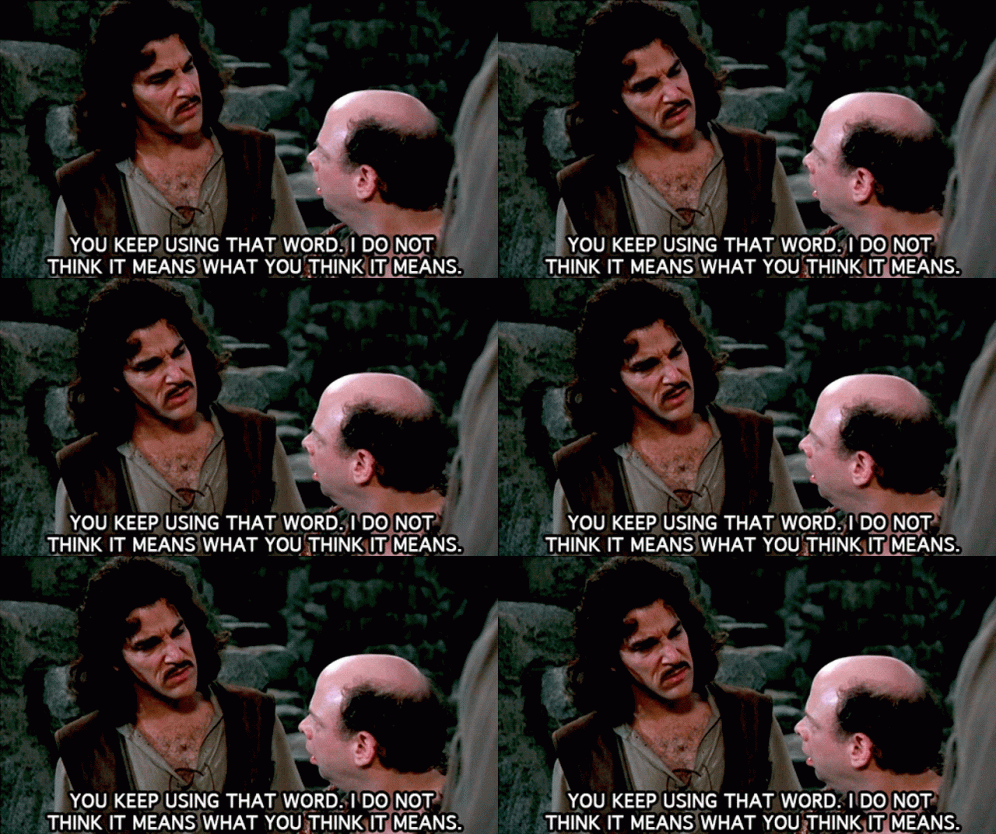
My LinkedIn job search alert for "systematic reviews" is continuously and more frequently returning sales jobs that "systematically review" their area.
One of us is Vizzini.
google 2012: here's how to make tacos
google 2018: here's where to BUY tacos NEAR ME
google 2024: hard shell tacos are made from fried corn tortillas, while soft shell tacos are medium or large freshwater turtles with oval-shaped shells covered by skin
If you're comfortable sharing. You don't have to share if you don't want to!
Do you play or are you just a fan?
I also love D&D and am holding my next character for a solo campaign. 😼
Fun fact about proximity search in #PubMed : stop words (e.g., the, of, kg, with, etc.) are counted, not overlooked. That means if you are using proximity to find phrases like "cancer of the bladder" or similar, your proximity N will need to account for the stop words. #medlibs
Okay #librarians, what is your favorite hack for quickly answering references questions outside of your area of expertise?
I'll go first:
Google the topic and add "liguide" to the search. Pretty much guaranteed to have a well researched and open overview of a topic.
Thank you!
