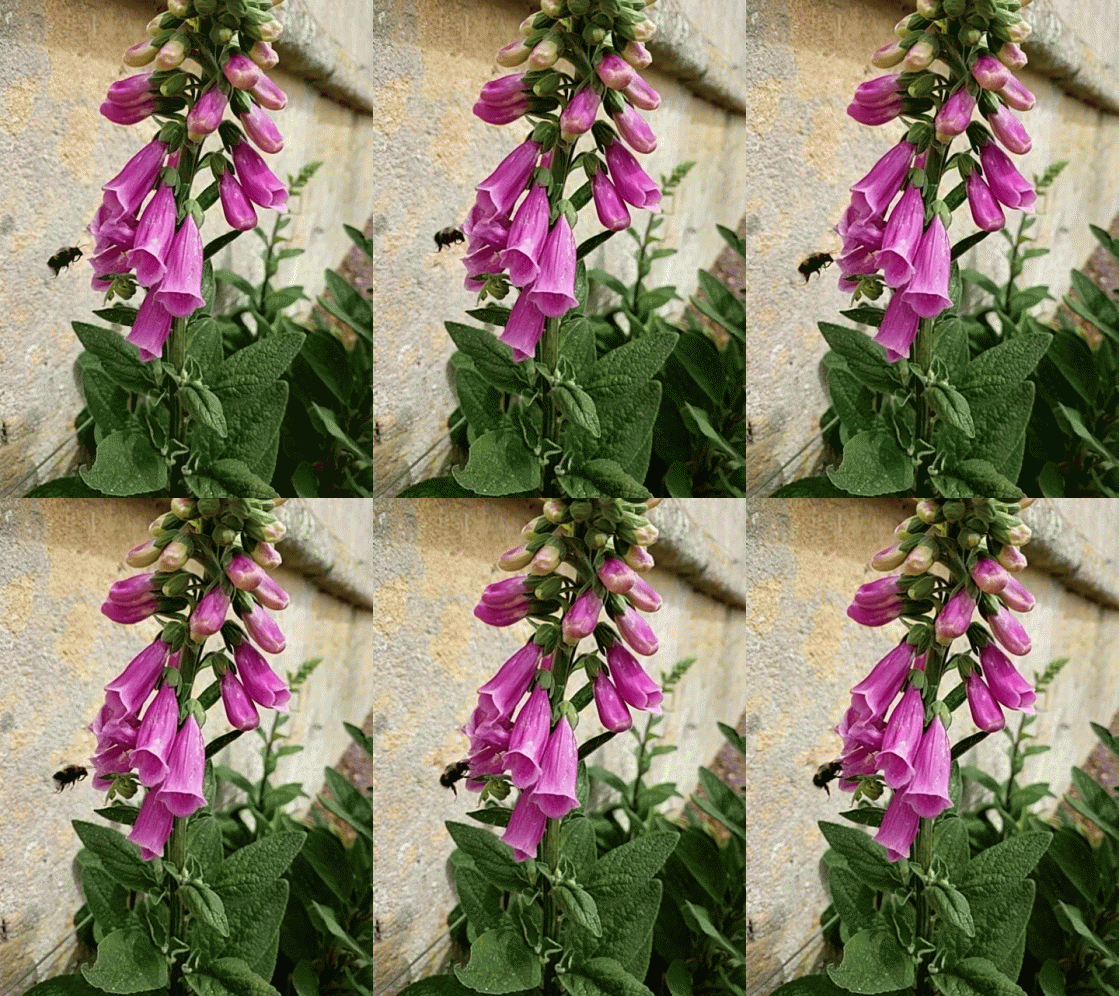
Bell rings
Inula helenus L
Inula - Elenio - Erbella - Ella - Lella - Liola
Cuoppo - Viola campana
COMPOSITE
In ancient time Sioscorides, the
Theophrastus,
Middle Ages, Albert the Great and St.
Hildegard, in the Renaissance, Mattioli praised the virtues of elecampane and its fame has certainly not faded over time. Only its root is active; after having been collected, it is cut into pieces and dried in the sun. The name of potio Paulina, an elecampane wine that was prepared in Germany, derives from St. Paul's recommendation to Timothy to drink a little wine to cure a weak stomach. In Alsace, a liquid called reps is still prepared today, macerating the root in must. The name of the species, helenium, seems to derive from the Greek Helen; in fact, according to legend, the plant was born from the tears of Helen, wife of Menelaus, who was the cause of the Trojan War.
In other times, it was cultivated for its medicinal root; having escaped cultivation, it can be found almost everywhere. The crops are used both for the production of liqueurs and for the pharmaceutical industry.
Habitat: Southern and Eastern Europe; in the vicavicinity of ditches and hedges; in Italy it is not very
M. s widespread; found especially in damp meadows; up to 100 m.
Identification: 1 to 2 m. Perennial, stem mo, leaves toothed, thick, whitish underneath,sthe cauline
Parts used: root.
• Constituents: inulin, peptic and resinous substances

Bell rings
Inula helenus L
Inula - Elenio - Erbella - Ella - Lella - Liola
Cuoppo - Viola campana
COMPOSITE
In ancient time Sioscorides, the
Theophrastus,
Middle Ages, Albert the Great and St.
Hildegard, in the Renaissance, Mattioli praised the virtues of elecampane and its fame has certainly not faded over time. Only its root is active; after having been collected, it is cut into pieces and dried in the sun. The name of potio Paulina, an elecampane wine that was prepared in Germany, derives from St. Paul's recommendation to Timothy to drink a little wine to cure a weak stomach. In Alsace, a liquid called reps is still prepared today, macerating the root in must. The name of the species, helenium, seems to derive from the Greek Helen; in fact, according to legend, the plant was born from the tears of Helen, wife of Menelaus, who was the cause of the Trojan War.
In other times, it was cultivated for its medicinal root; having escaped cultivation, it can be found almost everywhere. The crops are used both for the production of liqueurs and for the pharmaceutical industry.
Habitat: Southern and Eastern Europe; in the vicavicinity of ditches and hedges; in Italy it is not very
M. s widespread; found especially in damp meadows; up to 100 m.
Identification: 1 to 2 m. Perennial, stem mo, leaves toothed, thick, whitish underneath,sthe cauline
Parts used: root.
• Constituents: inulin, peptic and resinous substances
Some of the best medicinal books I own are written in Latin, Greek and Italian. Thankful daily for Translate apps!
#greenwitch #kitchenwitch #medicinewoman #healer #poisonpath #healingpath #hekate #hekatean #hecate #italianbooks #bookgang #sorcery #soror #rosycross #initiate #themysteries